Whole-Food vs Processed Breakfast & Snack Items
Ingredient and Nutrient Profile Comparisons
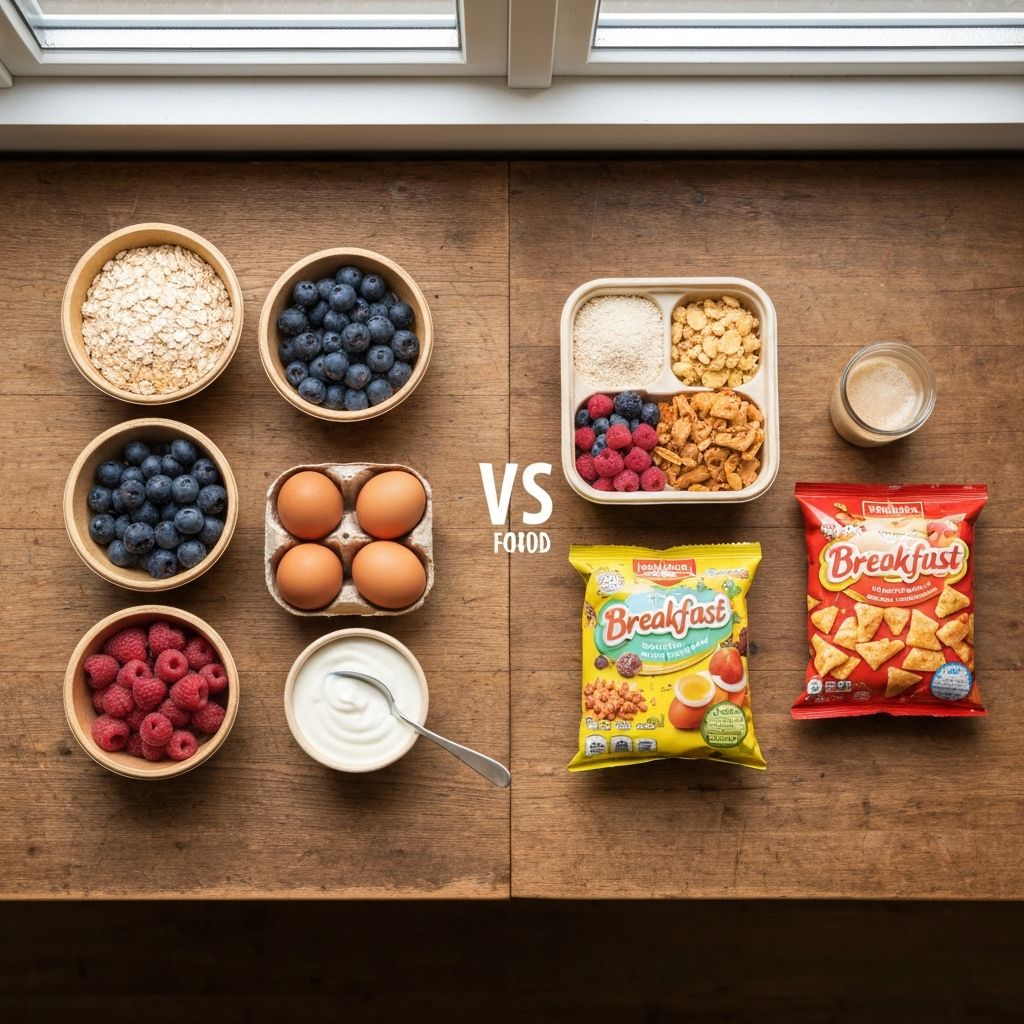
Breakfast Item Comparison: Porridge vs Breakfast Cereals
Both porridge oats and packaged breakfast cereals are available in UK supermarkets. The differences between these options are evident in ingredient lists and nutrition labels.
| Item | Energy per 100g | Sugar per 100g | Fibre per 100g | Ingredients |
|---|---|---|---|---|
| Porridge Oats | 389 kcal | 0.7g | 11g | Oats only |
| Typical Breakfast Cereal | 375 kcal | 25-35g | 2-4g | Grains, sugar, oils, salt, additives |
Porridge oats contain a single ingredient, whilst breakfast cereals typically include multiple components: grain base, added sugars, oils, salt, and preservatives. The added sugar content differs substantially between these options.
Snack Comparison: Mixed Nuts vs Processed Snack Bar
Raw nuts and commercially produced snack bars are both widely available. Their composition and ingredient lists differ considerably.
| Item | Energy per 100g | Added Sugar | Protein per 100g | Ingredients |
|---|---|---|---|---|
| Mixed Raw Nuts | 570 kcal | Minimal | 17g | Almonds, cashews, walnuts |
| Processed Snack Bar | 440 kcal | 20-30g per 40g bar | 6g | Grains, sugar, oils, nuts, chocolate, additives |
Processed snack bars typically contain added sugars and additional ingredients compared to raw nuts. Portion sizes are often pre-determined in processed products, whilst nuts typically require portion measurement.
Home-Cooked Breakfast vs Ready-Made Alternative
A comparable breakfast can be prepared from whole ingredients or purchased ready-made. The nutritional profiles differ due to ingredient selection and preparation methods.
| Breakfast Type | Total Energy | Added Sugar | Protein | Fibre |
|---|---|---|---|---|
| Home-made: Oats + berries + yoghurt + honey | ~300 kcal | ~15g (honey, yoghurt) | ~12g | ~5g |
| Ready-made cereal + milk | ~300 kcal | ~25-35g | ~8g | ~2g |
Comparable energy intake can be achieved through either route, but the macronutrient composition and added ingredient content typically differ. The home-made option allows ingredient selection and control, whilst ready-made options provide convenience with predetermined content.
Understanding Processed vs Whole Foods
The term "processed" encompasses a spectrum: minimal processing (freezing berries) through moderate processing (yoghurt fermentation) to substantial processing (commercial snack foods). There is no single definition that clearly divides foods into distinct categories.
Added sugars, sodium, and preservatives are more commonly found in highly processed commercial products. Ingredient lists on UK supermarket packaging clearly display all added components, allowing for comparison.
Convenience, shelf-stability, and preparation time favour processed options. Nutrient density and ingredient simplicity typically favour whole foods prepared from basic ingredients. Individual preferences, time availability, and dietary needs inform personal choice.
The nutritional information on all UK supermarket products is displayed in a standardized format on the back or front of packaging, allowing for direct comparison between options.
Reading Ingredient Lists
UK food packaging displays complete ingredient lists in descending order by weight. This allows comparison of what is actually included in different products.
Products with shorter ingredient lists typically contain fewer added components. Those with longer lists may include preservatives, emulsifiers, colourings, and other additives whose purposes include stability, texture, appearance, or shelf-life extension.
Added sugars appear in the ingredient list under various names (sugar, glucose syrup, honey, fruit concentrate, etc.). Reading the ingredient list provides transparent information about product composition.
Informational Content: The information presented here is educational and factual about food composition. Individual energy needs, food preferences, and dietary choices vary widely. This content does not provide nutritional recommendations or make claims about outcomes.
Explore Other Food Categories
Browse additional comparisons and informational guides about UK supermarket foods.
View all explorations